


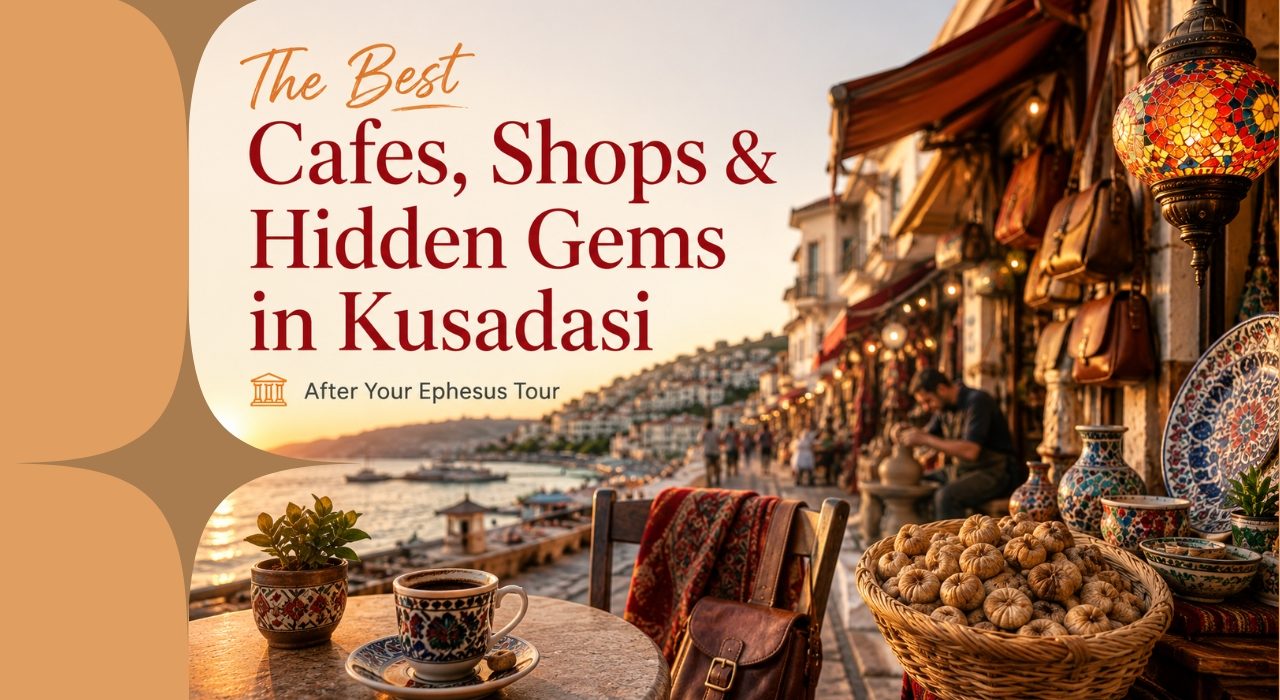
Most people come to Kusadasi for Ephesus. The ones who stay a little longer discover that Kusadasi shopping is a world of its own — ceramic workshops, covered bazaars, leather merchants, and fig sellers who’ve held the same corner for thirty years.
This guide is for the hours after the ruins. Because Kusadasi shopping done right is not about the mannequins in the doorways or the carpet dealers who’ve mastered eleven languages of small talk. It’s about knowing where to look.
Here’s the thing about Kusadasi that the usual travel content doesn’t capture: it’s two towns at once.
There’s the Kusadasi built for cruise ships — the waterfront promenade, the leather shops with mannequins in the doorways, the carpet dealers who’ve mastered eleven languages of small talk, the ice cream carts with theatrical spinning. It’s lively, commercially minded, and it works exactly as intended.
And then there’s the other one. Quieter streets behind the main bazaar where a retired fisherman plays backgammon at 2pm on a Wednesday. A ceramic workshop with a kiln in the back where the owner doesn’t care if you buy anything, as long as you understand the difference between hand-painted and machine-stamped. A fig seller who’s been at the same corner for thirty years and considers this non-negotiable. A café up a side street with no English sign — and no interest in getting one.
After your Ephesus tour, you have time. Not unlimited time, but enough. This is how to use it.

First: Give Your Brain 15 Minutes
Ephesus is a lot. Two hours on marble streets in the sun, with a thousand years of history narrated in real time — your mind needs a moment before you start doing anything else.
Don’t head straight for the main drag. Walk two or three streets back from the port and find a çay bahçesi (tea garden) in the older part of town. Someone will bring you tea without you asking. The pace drops to something that matches how you actually feel after walking through an ancient city.
This is not wasted time. Ephesus deserves at least fifteen minutes of quiet reflection before you start browsing rugs.
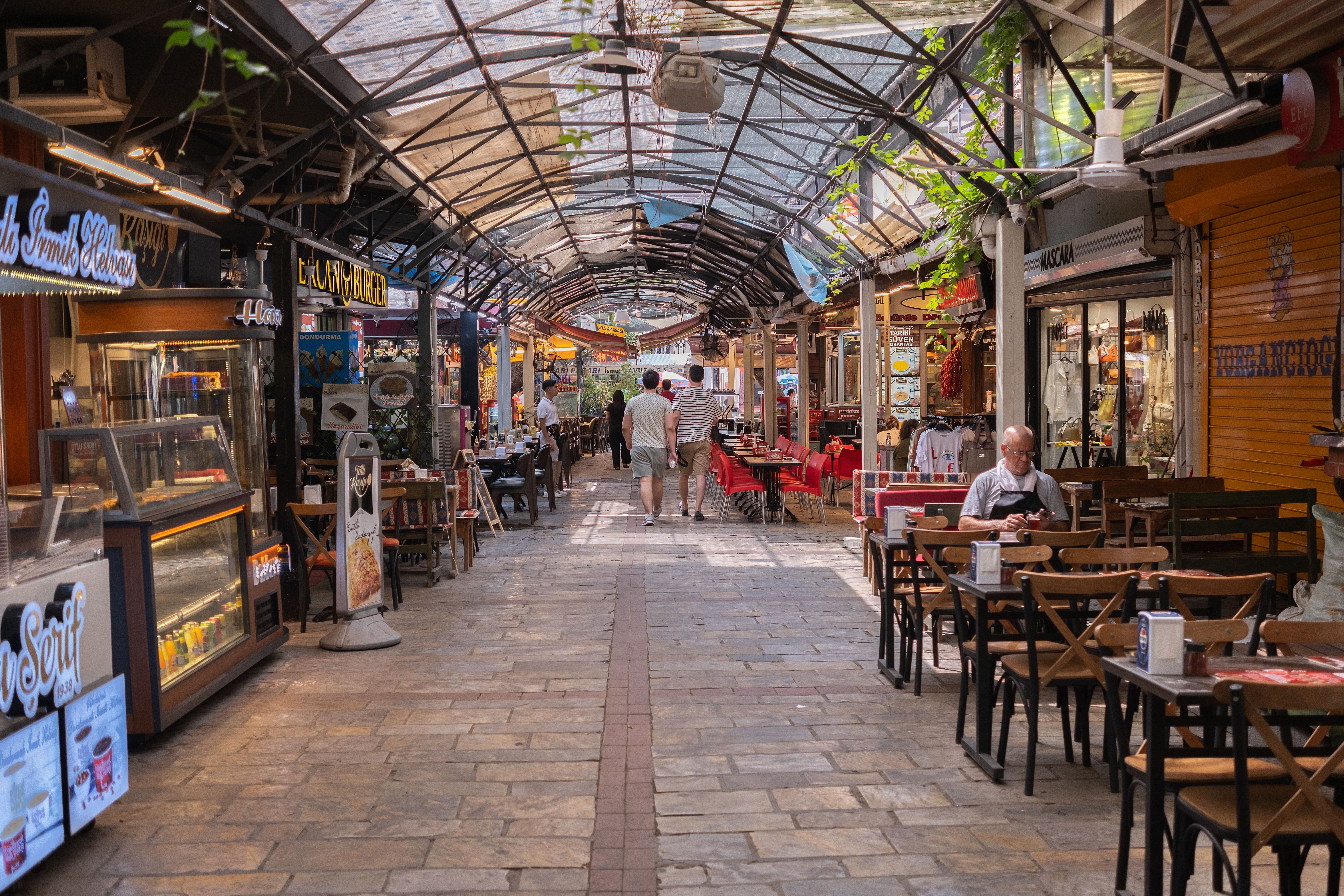
The Covered Bazaar: How to Navigate It Well
Kusadasi’s covered bazaar (Kapalı Çarşı) is built around the Öküz Mehmet Paşa Han — a 17th-century caravanserai that has been in continuous use as a trading place for around 400 years. Most people walk straight through the inner courtyard on their way to the shops. Don’t. The architecture alone is worth a pause.
The right approach: no fixed plan, no tight timeline, and a willingness to stop for tea roughly every 20 minutes.
Inside and around the bazaar you’ll find three broad types of shops:
- Souvenir-focused — higher volume, wider quality range, good if you need gifts and want everything in one place.
- Specialist — ceramics, leather, textiles, spices. Worth more of your time: the owners know their stock and can tell you things that make you want to buy.
- Local-facing — tailors, household goods, food. Not aimed at visitors, but often the most interesting to browse. The spice vendors in this category supply local cooks, which means better stock and more honest prices.
Walk the whole bazaar before you buy anything. See what’s there. Then go back for the things that stayed in your head.
What to Buy: A Practical Guide
Ceramics — The Craft Worth Seeking Out
Turkish ceramics have a history running back through the Ottoman empire to the medieval period, and the tradition is genuinely alive here. Look for hand-painted tiles and pottery in the classic Iznik style (geometric patterns, floral motifs, blue-and-white or blue-and-red palettes) or Kütahya style (wider colour range, more painterly designs).
How to tell hand-painted from machine-made:
- Check the back. Hand-painted pieces have slight pattern variations, small imperfections, and a hand-signed or hand-stamped maker’s mark. Machine-produced pieces are more uniform, with a more plastic-looking glaze.
- Feel the form. Hand-thrown pottery has slight irregularities — the base won’t be perfectly flat, the walls won’t be even in thickness. That’s not a flaw. That’s evidence.
- Ask directly. A dealer who knows their stock answers immediately and specifically. A dealer selling machine-made pieces as handcrafted will become vague.
The best ceramics shops are the ones with actual workshop connections. If you see someone painting, stop and watch — it’s genuinely interesting and completely free.
Best buy: A hand-painted tile (light, easy to pack) or a small bowl or plate. It will outlast everything else in your luggage.
Rugs and Kilims — What to Ask Before You Buy
Turkey has one of the oldest and most sophisticated carpet-weaving traditions in the world, and the Aegean region produces excellent work. The tea-and-soft-sell routine in carpet shops has a mixed reputation — partly because it’s a performance, and partly because at the end of it you might own a carpet you didn’t plan to buy. The carpets are often genuinely good, which makes this a complicated situation to be in.
Key distinctions:
- Kilim vs. carpet: A kilim is flat-woven — no pile, lighter, generally less expensive. A knotted carpet has a pile, is heavier and warmer, and can represent months of labour (a silk carpet may have 400 knots per square centimetre).
- Hand-knotted vs. machine-made: Look at the back. Hand-knotted pieces show individual knots and slight pattern variation. Machine-made carpets have a uniformly regular, almost printed-looking backing. The price difference is enormous; so is the quality gap.
- Natural vs. synthetic dyes: Natural dyes soften and deepen over time. Synthetic dyes can fade unevenly. Test: press a damp white cloth onto the pile. Significant colour transfer means the dyes may not be well fixed.
Ask every dealer: Where was this made? What are the fibres? How old is it? A good answer means they know their stock. Vagueness means they don’t.
You can spend an hour looking and walk away empty-handed. That’s fine — the good dealers have been in business long enough to know that not every visitor is a buyer.
Leather — How Not to Get It Wrong
A lot of what’s displayed in the most prominent shop windows is made for volume and tourist throughput rather than longevity. The better leather — which absolutely exists here — is usually not on the mannequins by the door. It’s on the rail further back. The bags stacked without a price tag. The wallets in the glass case rather than the pile on the counter.
How to assess quality quickly:
- Weight: Good leather has substance. Thin leather that feels like stiff fabric won’t age well.
- Flex: Bend a corner with your fingers. Quality leather has give and springs back. Immediate cracking is a concern.
- Smell: Real leather smells slightly warm, slightly animal. A strong chemical smell usually means heavily processed leather or a synthetic material.
- Edges: Look at cut edges on handles, around zippers, at wallet folds. Good leather goods finish edges properly — stitched, burnished, or treated. Raw, fraying edges indicate less care in construction.
If you’re buying a jacket, sit down in it and raise your arms. Turkish leather cuts run more structured in the shoulder and fitted at the waist than European or American styles — try a size either side before deciding.
Best buy: A bag over a jacket if you’re short on luggage space. A wallet or belt if you want something small.
Food — The Easiest and Most Honest Purchases
The small food shops behind the bazaar — not the tourist-facing spice shops with pyramids of exotic powders, but the actual local grocery stores — carry dried Aegean figs, vacuum-packed nuts, locally pressed olive oil, and village-made cheese that doesn’t have an English description because it doesn’t need one.
Best food purchases: Dried figs (vacuum-packed), roasted pistachios, cold-pressed extra virgin olive oil, mixed lokum from a proper confectioner, dried apricots if in season.
And a bag of mixed nuts from any market vendor. Eat half on the way home.
Hidden Gems: The Other Kusadasi
The old harbour at early evening. Once the cruise ship crowds have headed back, the light goes amber over the water. Find a seat facing the bay and stay until it changes. This is the version of Kusadasi that people who live here actually see.
Tea houses north of the bazaar. Primarily for locals, which means the tea is better, the chairs are more comfortable, and nobody is trying to sell you anything. The backgammon sets on the tables are not decorations. Sit as long as you want.
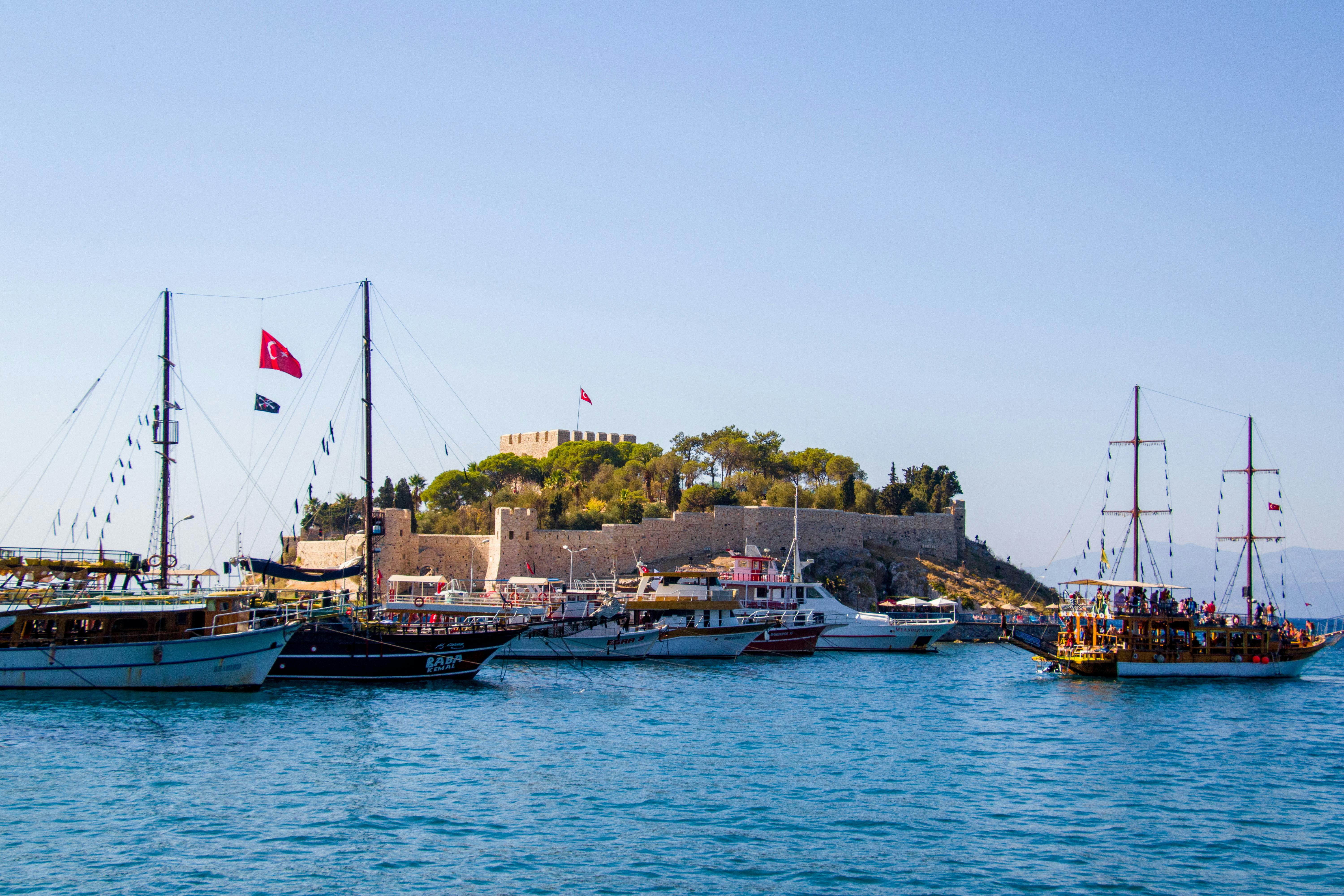
The castle (Güvercin Ada). The small peninsula just south of the harbour has a Byzantine-Genoese castle, now a free public park. It’s a 10-minute walk from the bazaar. Most people walk straight past it heading toward the shops. The view of the bay from the walls is excellent and it costs nothing.
The morning market. Kusadasi’s weekly street market sets up north and west of the centre — produce, olives, cheese, pickles, fabric, household goods, cheap sunglasses. Worth setting an early alarm for if you’re staying overnight. (Ask locally for the current day of the week, as it can change seasonally.)
Before You Leave
At some point in the afternoon — probably when you’ve bought more than you planned and seen more than you expected — find a café and sit down one more time.
The best conversations happen in the second hour of wandering. The street that seemed too narrow to bother with turns out to have the fig seller you were looking for. The shop you almost skipped at 3pm looks completely different at 4pm.
Ephesus is the reason most people come to this part of Turkey, and it should be — it’s extraordinary in a way that very few places match. Kusadasi is the place that makes you want to come back. Not because it’s ancient, but because it’s alive.
Ready to make the most of both? Ephesus Bus Tours runs daily departures from Kusadasi with flexible Hop-On Hop-Off passes, skip-the-line entrance tickets, and multilingual guides. Spend your time at Ephesus and in Kusadasi doing what you actually want to do — not standing in queues.