
PARTRA TURIZM TURSAB-14487

EPHESUS

GUIDE BOOK

Ephesus Bus Tours — your gateway to one of antiquity's greatest cities. Walk the marble streets where emperors, philosophers and merchants once gathered.

Civic · Roman

State Agora

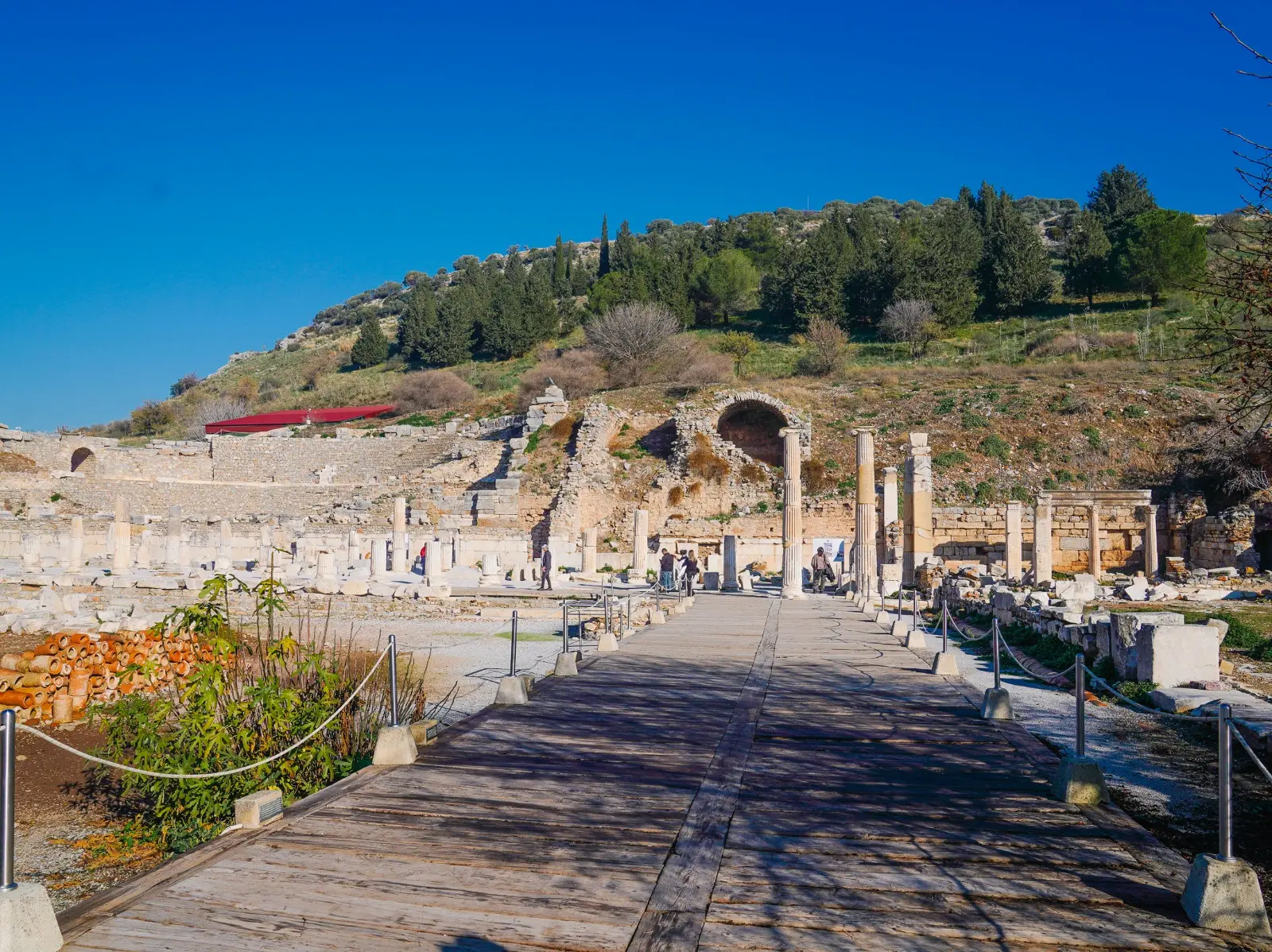
The State Agora served as a place for official and public meetings. It has dimensions of 160 by 73 meters, and it was once surrounded on three sides by colonnades. These stoas were not only ideal for the citizens who wished to discuss politics, but also played the role of classrooms where teachers and philosophers could gather their students.
State Agora

Civic · Roman

The State Agora served as a place for official and public meetings. It has dimensions of 160 by 73 meters, and it was once surrounded on three sides by colonnades. These stoas were not only ideal for the citizens who wished to discuss politics, but also played the role of classrooms where teachers and philosophers could gather their students.
Bouleuterion

Civic · Roman

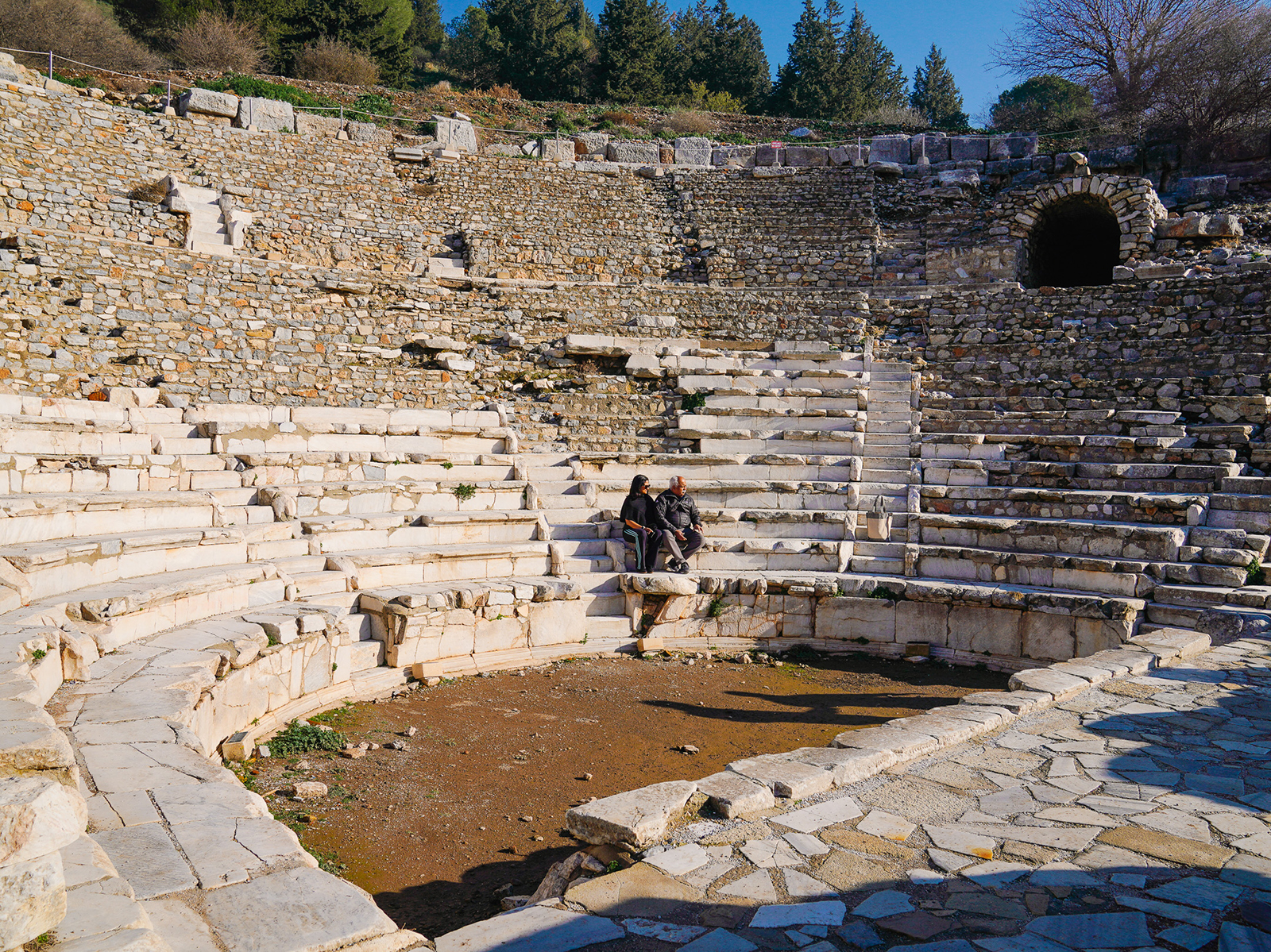
Although the building looks like a small theatre due to its the presence of the prytaneion and the upper Agora it can be concluded that this was rather a bouleuterion or a meeting place of the city council. Possibly it was simultaneously used as a place of artistic performances. The odeon was built around 150 AD by Publius Vedius Antoninus.

Prytaneion

Civic · Roman

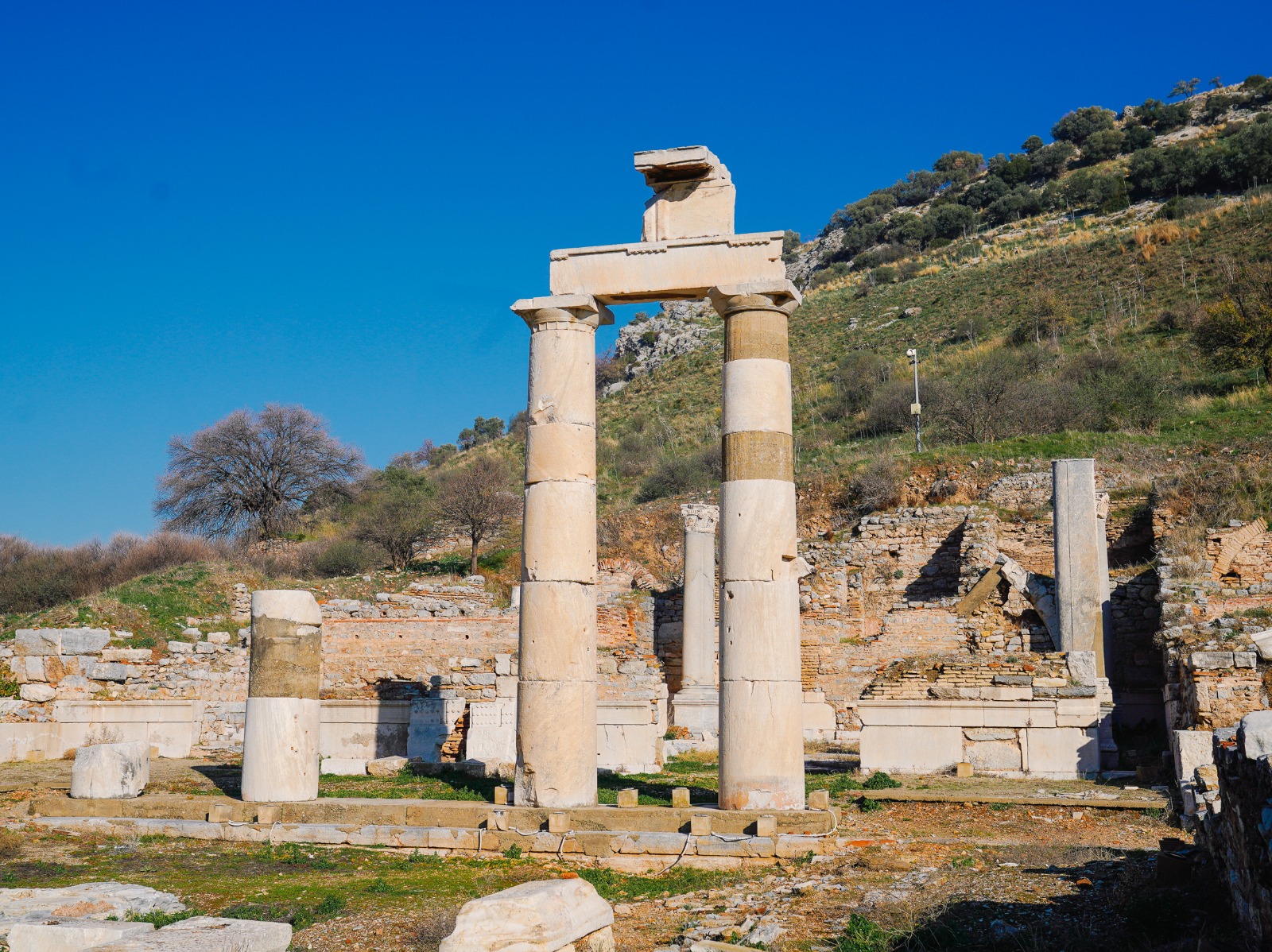
Prytaneion was the seat of the autonomous city of Ephesus and the place where official celebrations, receptions, and banquets were held. Next to it stood the temple of Hestia, where an eternal flame burned. The preserved fragments of prytaneion are dated to the reign of Emperor Augustus.

Memmius Monument

Civic · Roman

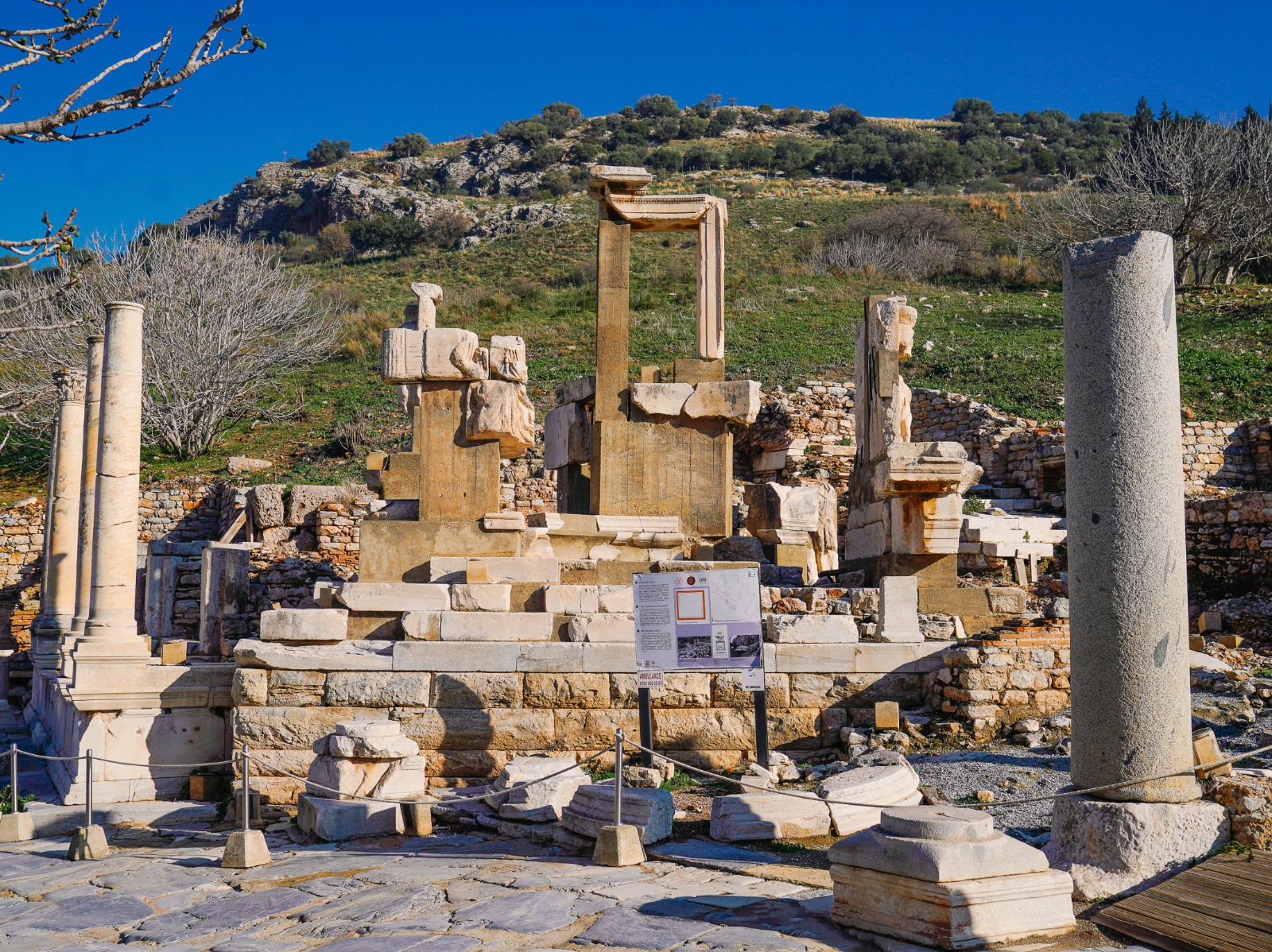
According to the discovered fragment of an inscription, on the base of stone blocks once stood the statue of Lucius Cornelius Sulla, the Roman commander and dictator. The monument was founded by his grandson Memmius as a token of gratitude of the inhabitants of Ephesus to Sulla for defeating Mithridates VI of Pontus.

Nike

Religious · Roman

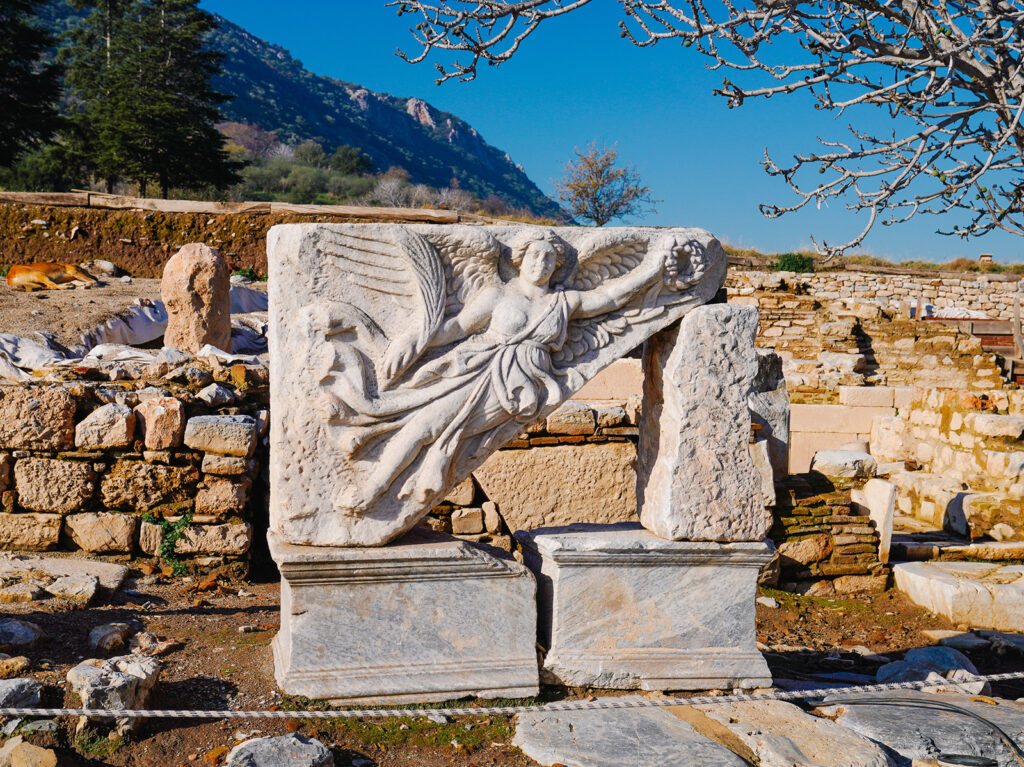
This relief of Goddess Nike at the Domitianus Square is considered to have been a decorative element on the second story of the Hercules Gate on the Port of the Curetes. Meaning ‘victory’ in Greek, the Goddess was generally depicted as the young winged girl descending swiftly from the skies to bring victory.

Hercules Gate

Civic · Roman

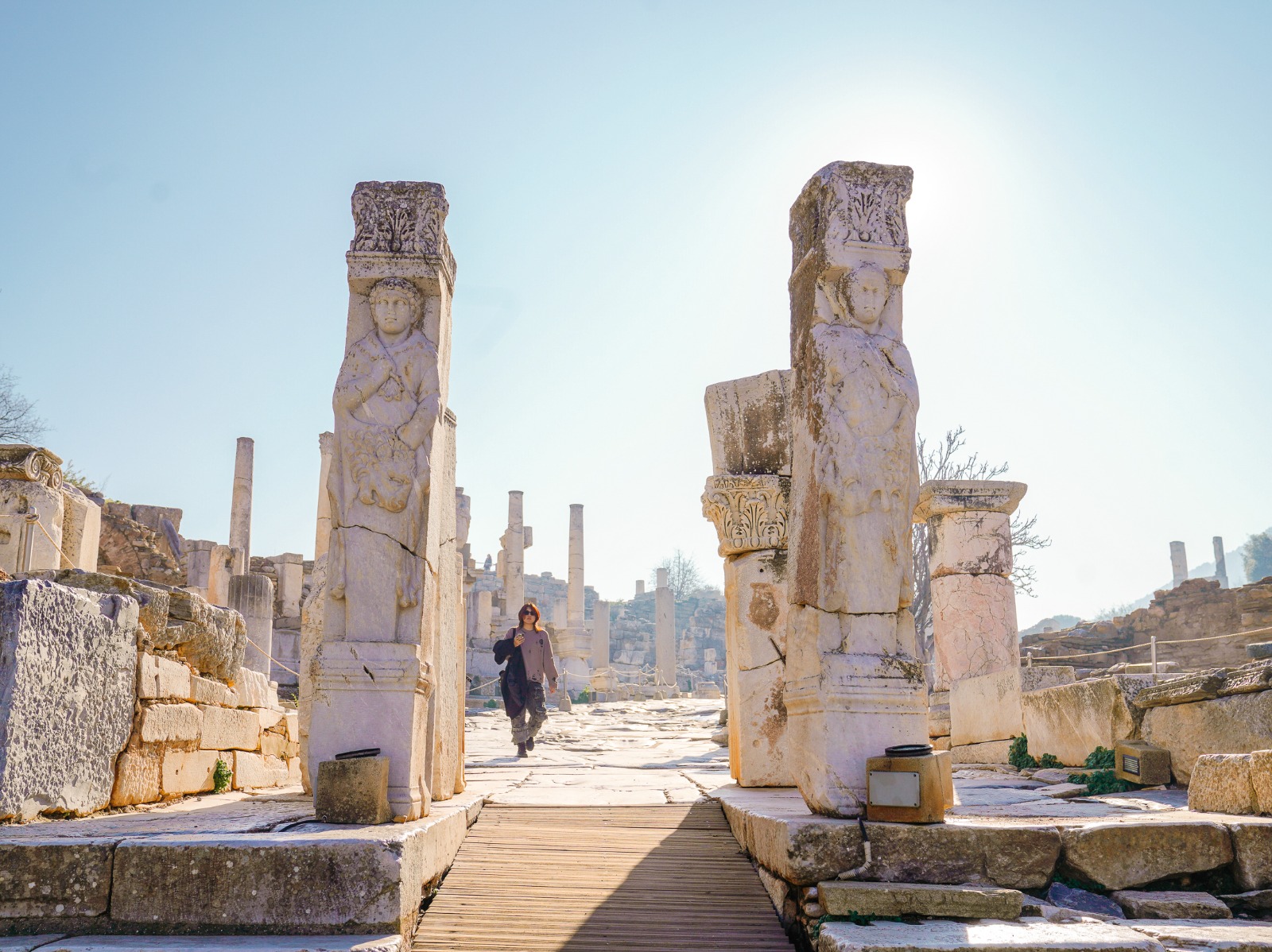
This gate, located near the Curetes Street, was built in the 4th or the 5th century AD. Preserved fragments of the reliefs depict Hercules and decorated column bases.

Fountain of Trajan

Civic · Roman

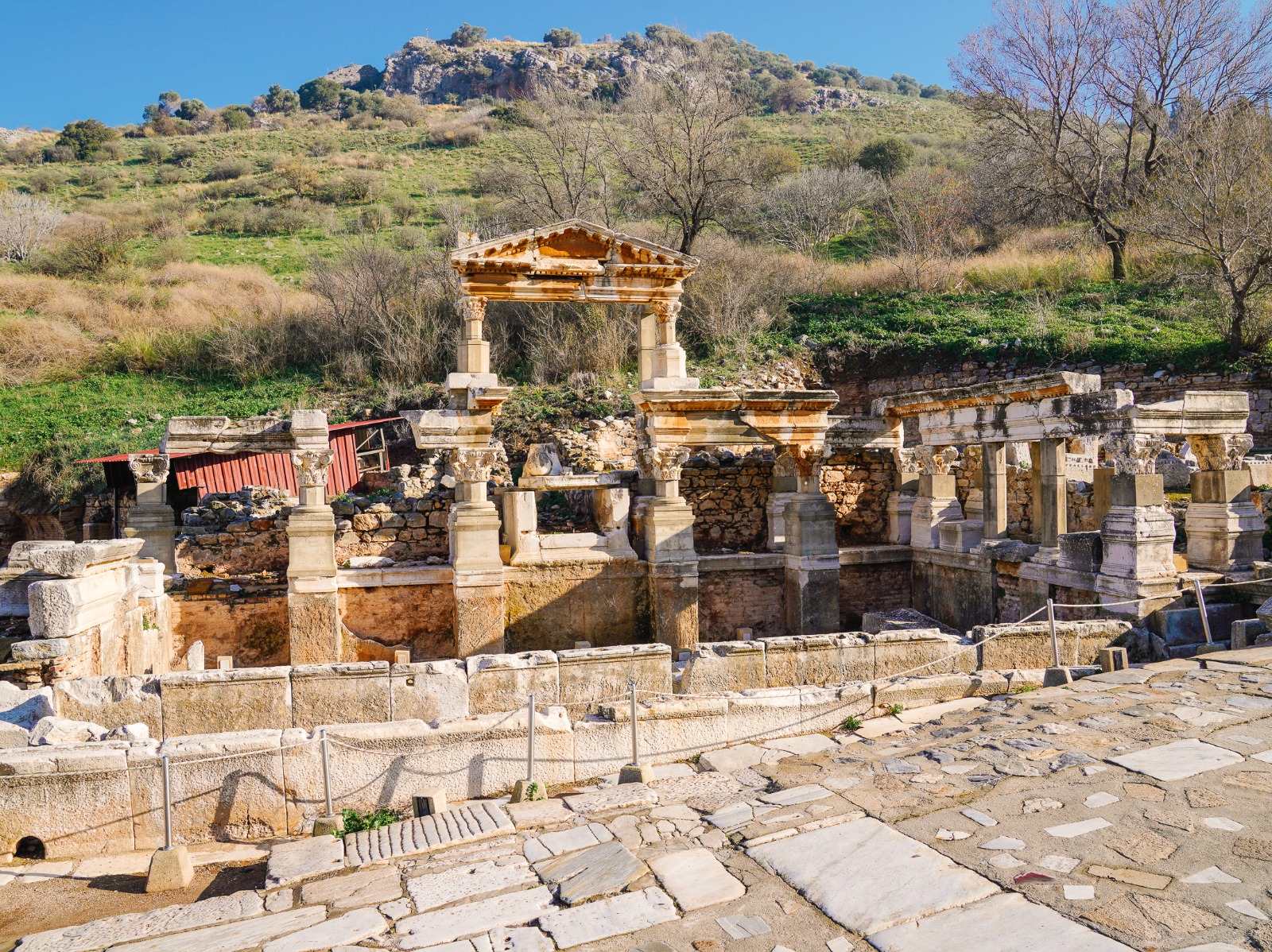
The fountain of impressive dimensions is situated on the Curetes Street. It has a square of pool surrounded on three sides by a two-storey structure. Once it was decorated with the colossal statue of Emperor Trajan, standing in the center of the building, from which flowed the water filling the pool.

Temple of Hadrian

Religious · Roman

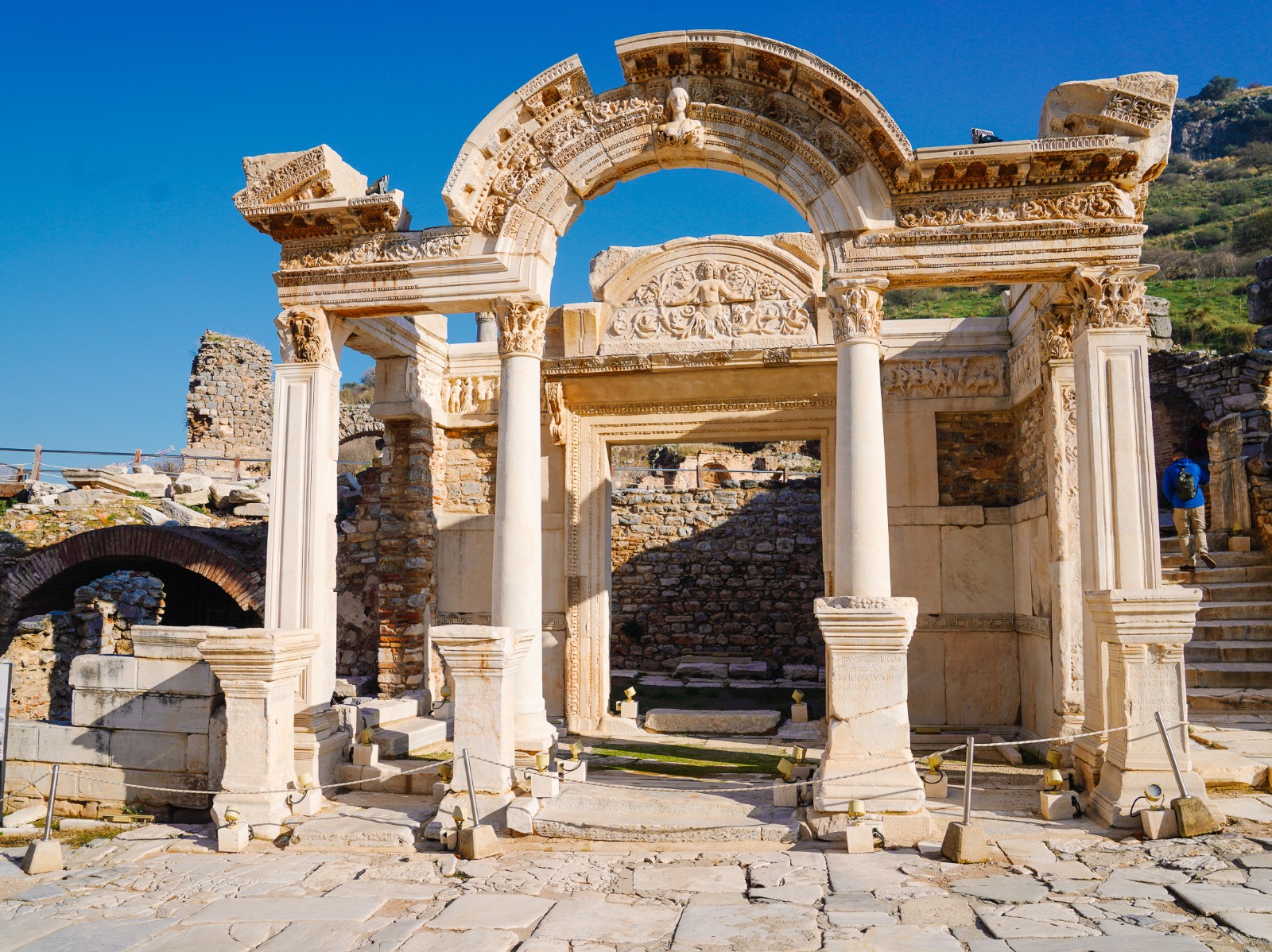
The Temple of Hadrian, despite its small dimensions, is a very attractive part of the visit in Ephesus. It was built in Corinthian order and dedicated to Emperor Hadrian. Its cells arise stood a statue of emperor Hadrian, who was worshipped as a deity. The construction of temples dedicated to the Roman emperors was a widespread custom in Anatolia. The purpose was to ensure that local municipalities gained the favor of Rome.

Latrines

Utility · Roman

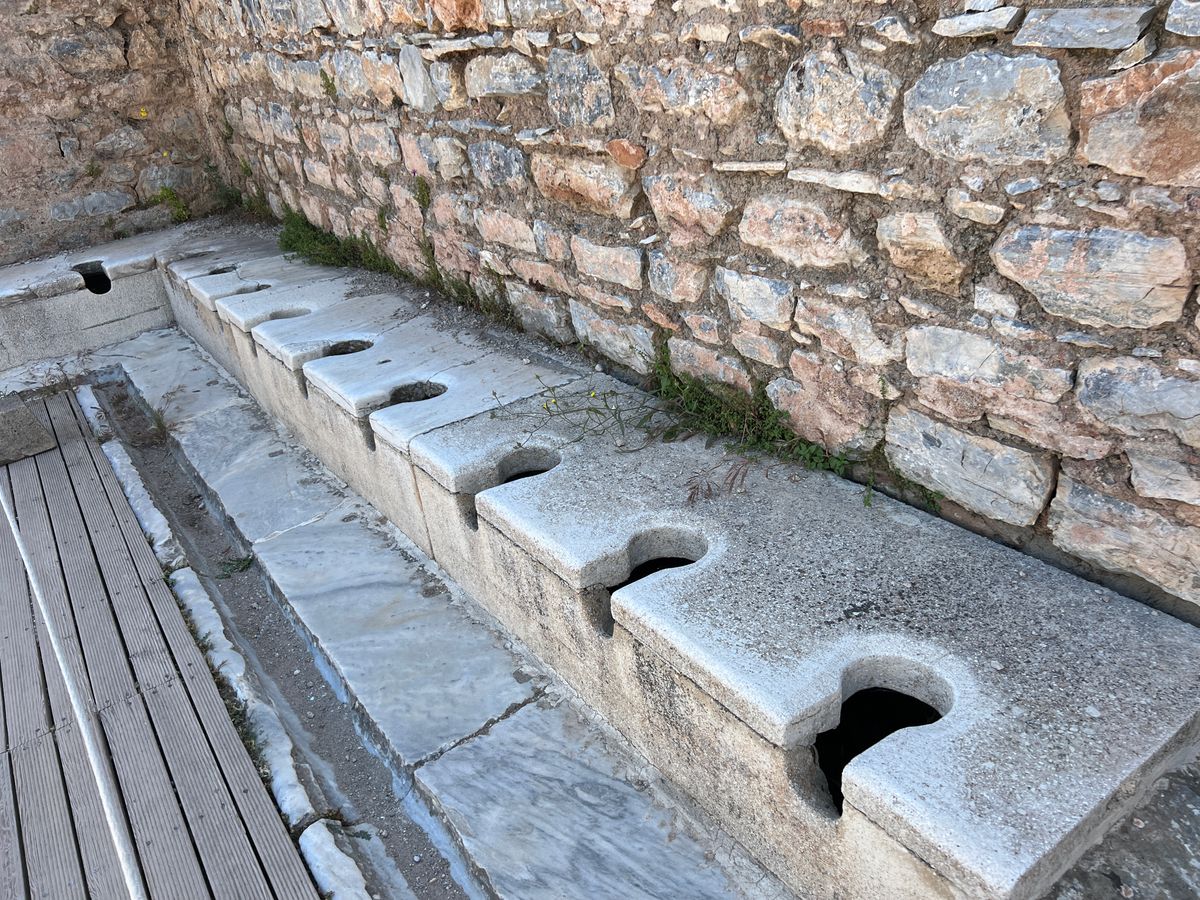
In the quarter of Ephesus located to the north-east of the junction of Marble and Curetes Streets, a public toilet was found. It was constructed in the 1st century CE over a channel with an uninterrupted flow of fresh water and the toilet seats, formed marble bench. Holes into marble benches that line the walls. There were three rows of toilets along three sides of the building. The toilets were wholes cut in a marble bench, and their total number was 46.

The Library of Celsus

Cultural · Roman

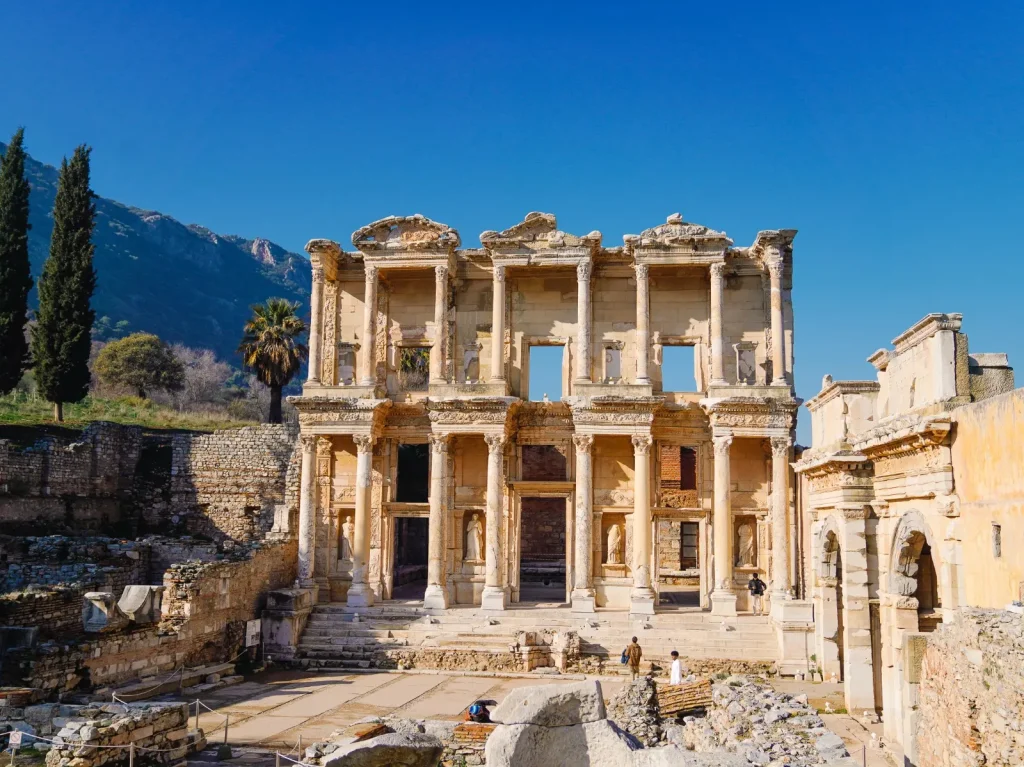
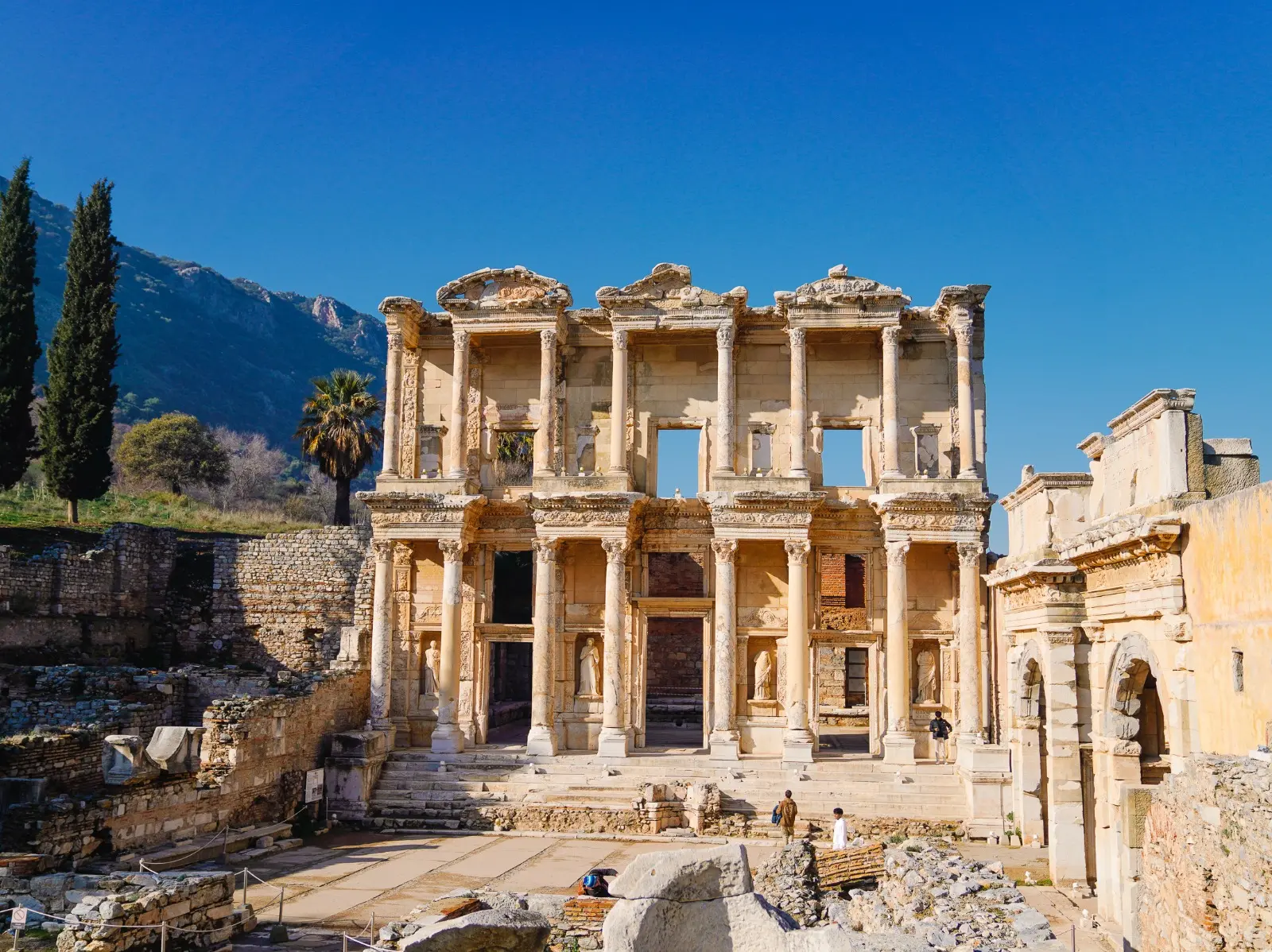
The Library of Celsus is probably the most distinctive building commonly associated with Ephesus. The library has a two-storey facade, and its interior is one large room with dimensions of 10.92 × 16.70 meters. The two-storey structure was supported by four pairs of columns, between which there were three entrances to the building. At the level of the second floor three windows were placed, illuminating the reading room. The statues adorning the figure of Library of Celsus represent the four Virtues: Sophia (Wisdom), Arete (Bravery), Episteme (Knowledge) and Ennoia (Thought).

Commercial Agora

Commerce · Hellenistic

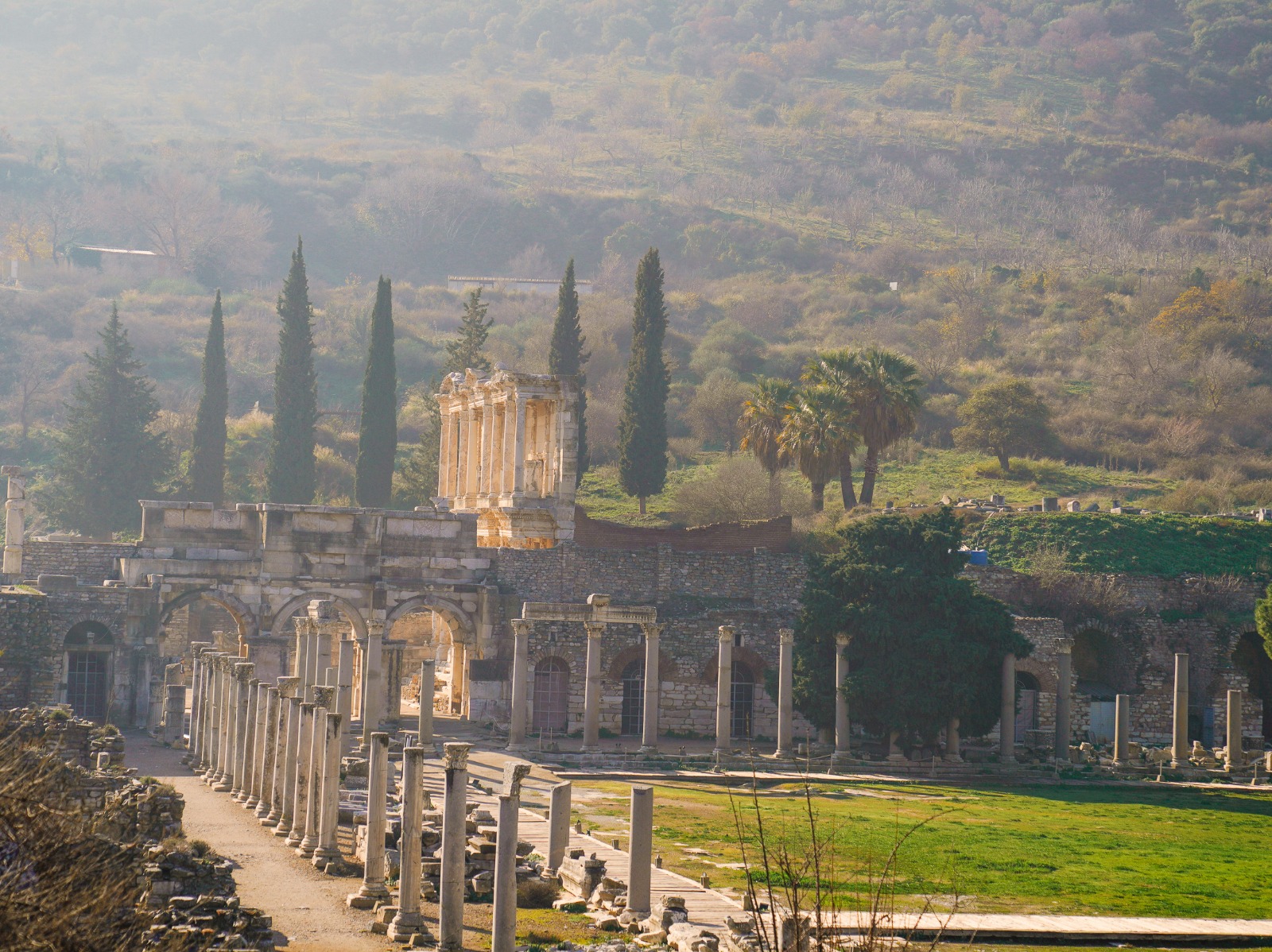
This trade area was established in Ephesus in Hellenistic times, as evidenced by the western gate fragments built in the Ionic order. The agora was surrounded by stoas (colonnades), significantly enhanced during the Roman times. At the center of the agora stood a so-called horologion, which was a combination of color and water clock. All colonnades were decorated with hundreds of statues of orators, philosophers, athletes and officials.

Grand Theater

Cultural · Hellenistic

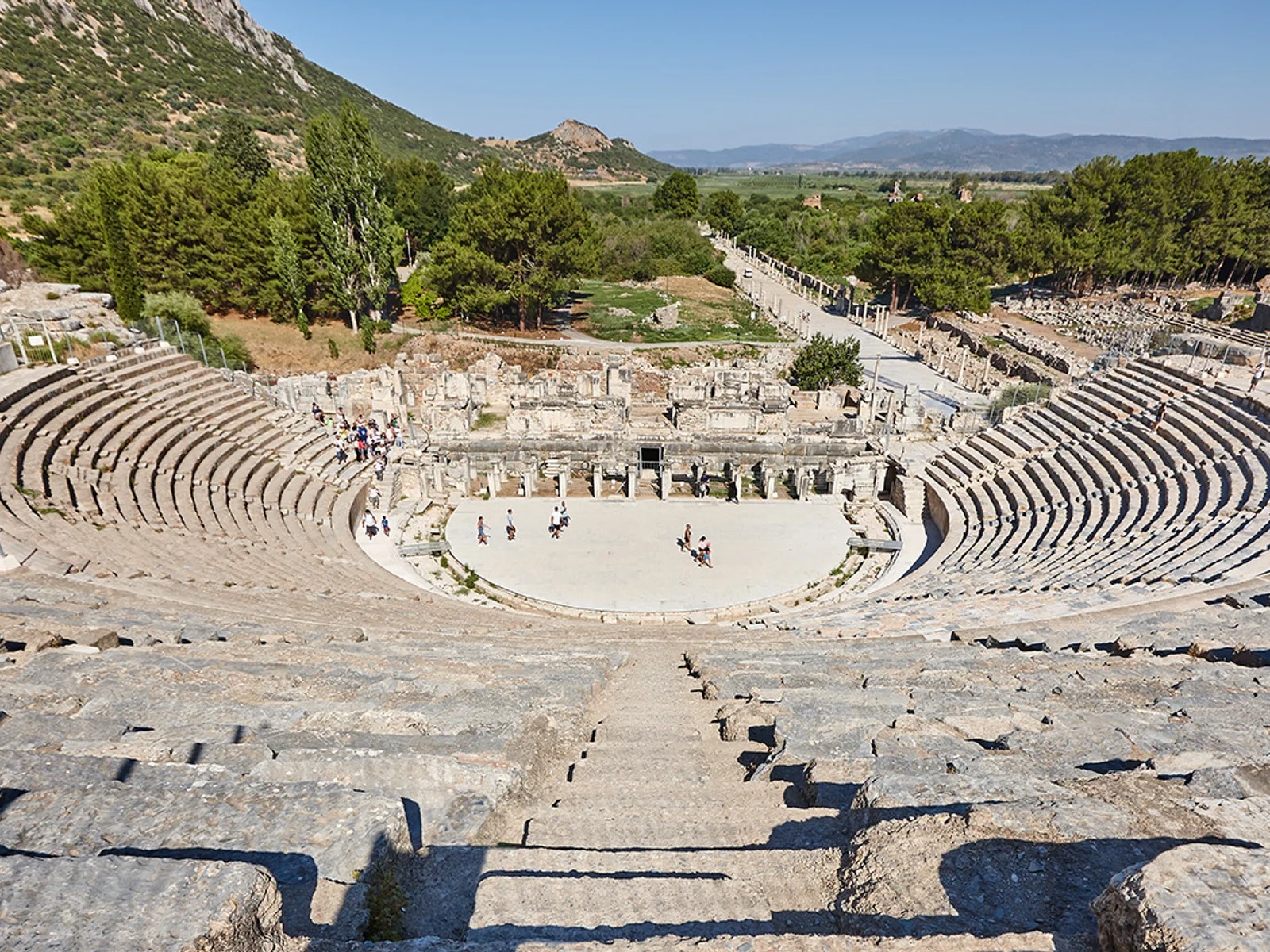
The great theater of Ephesus is a very well preserved and very impressive building. This structure, built of marble, has a width of 154 m and its audience once reached up to 24,000 spectators. In its heyday, it could accommodate up to 24,000 spectators.

Partner Discounts

Upto

discount
0 %

Upto

discount
0 %

Upto

discount
0 %

Upto

discount
0 %

Pub Time

discount
0 %

Pub Time