


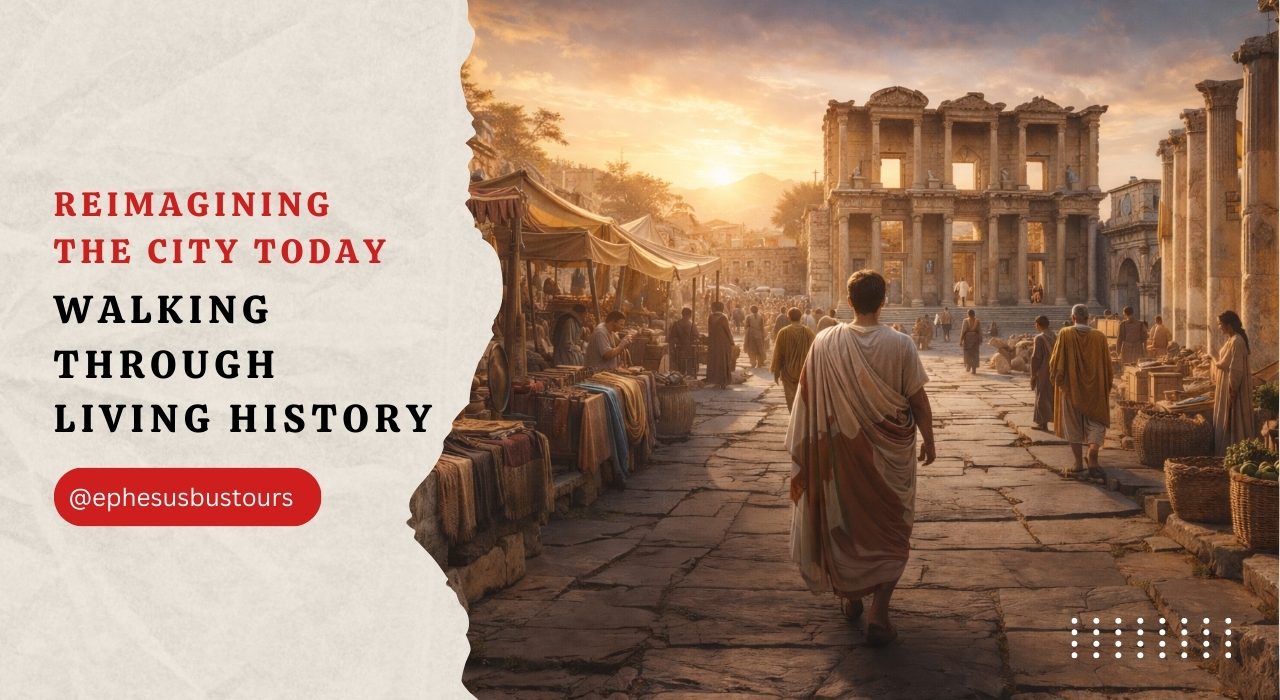
What did it truly mean to wake beneath the Anatolian sky in the ancient city of Ephesus — not as a ruler immortalised in stone, but as an ordinary citizen negotiating commerce, belief, hierarchy, and hope? A Day in the Life of an Ephesian was not carved in marble. It was lived in motion — in kitchens fragrant with olive oil, in marketplaces dense with calculation, in whispered devotions at dusk, and in ambitions that felt urgent rather than historic.
To understand daily life in ancient Ephesus is to move beyond monumental façades and into lived rhythm. Behind the grandeur of the Library of Celsus and the vast incline of the Great Theatre of Ephesus stood thousands whose routines sustained one of the Roman Empire’s most refined metropolises.
Let us step into a single day.
Dawn Over the Marble Streets
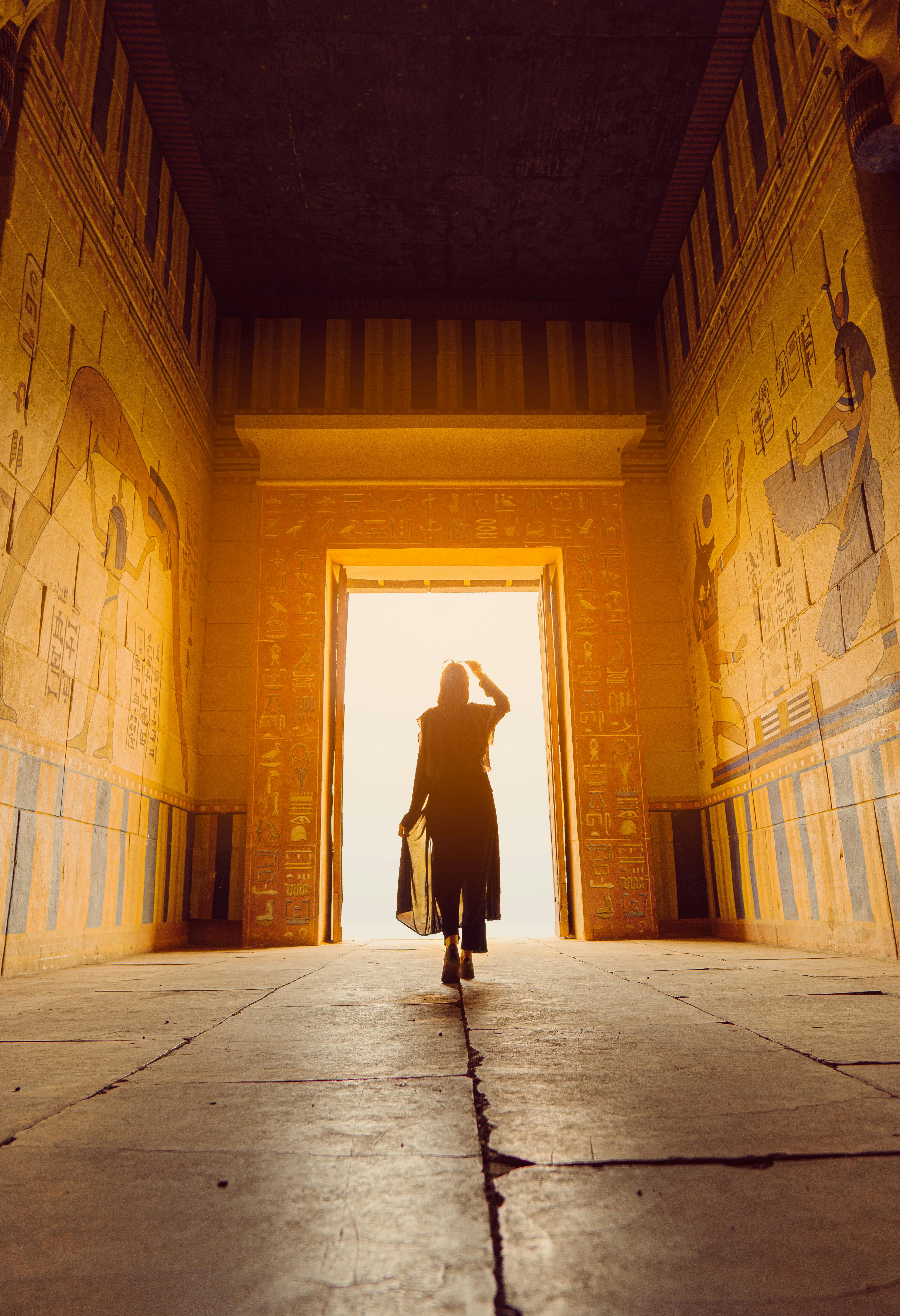
A Day in the Life of an Ephesian began before spectacle and before proclamation.
The horizon lightened gradually. Oil lamps flickered out. Wooden shutters opened toward streets still cool from the night air. The city did not erupt awake; it unfolded deliberately. Bakers were already at work. Grain, ground at first light, was kneaded into dough and pressed into communal ovens. The scent of warm bread drifted through narrow lanes. Bread was not indulgence — it was civic infrastructure.
At public fountains, water carriers gathered. Information circulated in hushed tones:
A delayed grain shipment.
A rumour from Rome.
An appointment in the provincial administration.
In life in Roman Ephesus, knowledge travelled as strategically as a coin.
Meanwhile, in the hillside Terrace Houses, servants prepared basins for washing. Heated floors retained warmth from the previous evening — evidence of Roman engineering integrated seamlessly into domestic comfort.
The day had begun quietly but decisively.
The Agora: Where Reputation Meant Survival
By mid-morning, daily life in ancient Ephesus converged in the Agora. Ephesus was not provincial. It was cosmopolitan. Its harbour connected Asia Minor to Greece, Egypt, and the broader Mediterranean world. Ships carried spices, marble, papyrus, textiles, and wine. In return, Ephesian craftsmanship travelled outward. A Day in the Life of an Ephesian merchant was strategic theatre.
Negotiations unfolded with restraint:
- A measured pause before naming a price.
- A sceptical glance at a rival stall.
- A deliberate implication of scarcity.
Reputation was wealth. One dishonest transaction could isolate a trader from vital networks. Bronze workers hammered with rhythmic precision. Jewellers shaped intricate filigree. Apprentices observed silently, absorbing technique essential for continuity. When visitors seek an immersive Ephesus ruins experience today, they often admire the architecture. Yet it was commerce that sustained the ancient city of Ephesus — disciplined, competitive, and relentless.
Domestic Life: Private Worlds Behind Public Grandeur
Public monuments dominate imagination. However, A Day in the Life of an Ephesian unfolded most intimately within domestic interiors. In elite residences, mosaic floors depicted mythological scenes in meticulous geometric patterns. Frescoes in ochre and crimson suggested aesthetic confidence rather than extravagance. Indoor plumbing and advanced drainage systems reflected technological sophistication.
Morning meals were structured yet restrained — bread, olives, fruit, diluted wine. Children rehearsed rhetorical exercises, cultivating eloquence. Education was social capital. Mastery of speech could elevate one’s standing dramatically. In modest households, routine was equally disciplined. Women supervised textile production, food preparation, and household accounts. Enslaved individuals managed labour fundamental to urban efficiency — dock work, domestic service, artisanal support.
A Day in the Life of an Ephesian woman demanded managerial intelligence within defined social boundaries. Influence often operated discreetly yet decisively. Behind marble grandeur existed constant coordination.
Midday Governance and Intellectual Ambition
As sunlight intensified, administrative and intellectual life assumed prominence. Magistrates reviewed legal petitions concerning property disputes, contracts, and inheritance. Law structured commerce and reinforced stability in a city dependent upon trade. Meanwhile, philosophers gathered students beneath shaded colonnades. Stoicism and Epicureanism offered frameworks for navigating ambition and uncertainty.
In daily life in ancient Ephesus, intellectual pursuit was pragmatic. Eloquence could secure political office. Persuasive speech shaped civic identity. Scrolls were copied carefully in libraries. Ideas travelled alongside merchandise. The ancient city of Ephesus was prosperous — yet it was equally ambitious in thought.
The Great Theatre: Collective Identity in Motion
Afternoons often led citizens toward the Great Theatre. Capable of seating more than 25,000 spectators, it was both an entertainment venue and a civic amplifier. Performances blurred boundaries between art and politics.
A Day in the Life of an Ephesian might include:
- Dramatic performances.
- Imperial proclamations.
- Gladiatorial contests.
- Civic assemblies.
Here, dramatic performances blurred into political messaging. Imperial announcements were amplified across stone tiers. Civic identity was shaped in collective reaction. Visitors standing within the theatre during a guided exploration of Ephesus often discover that the space was not built for spectacle alone — it was designed for influence.
Public reaction mattered. Applause validated authority. Silence signalled tension. Collective emotion could legitimise or destabilise. Festivals transformed the city into an orchestrated spectacle — music, procession, banners, and calculated display. Life in Roman Ephesus balanced labour with communal theatre. A well-structured Ephesus sightseeing tour explains how acoustics, architecture, and authority intersected in this arena. Without interpretation, it is impressive. With context, it is transformative.
The Sacred Framework of the City
As the afternoon softened, spiritual consciousness intensified.
The imposing Temple of Artemis once dominated both skyline and psyche. Pilgrims travelled vast distances to honour Artemis, goddess of protection and fertility. Offerings accumulated — coins, figurines, carefully articulated prayers. Religion structured time. Ritual calendars governed communal rhythm. Ephesus, however, was pluralistic. Roman imperial cult practices coexisted with local traditions and emerging Christian communities. Spiritual affiliation could unify households or provoke tension.
At dusk, oil lamps illuminated domestic shrines. Prayers were practical — prosperity in trade, protection for children, relief from illness. Faith was not a distant abstraction. It was a daily negotiation with uncertainty.
Social Hierarchies: Complexity Beneath Prosperity
A Day in the Life of an Ephesian varied dramatically by status. Wealth afforded education, architectural comfort, and political access. Poverty demanded resilience. Slavery underpinned much of the city’s prosperity, embedding inequality into its structure. Yet emotional patterns transcended hierarchy:
Concern for children.
Anxiety over income.
Desire for legacy.
Hope for stability.
Two millennia later, these impulses remain recognisable.
Reimagining the City Today: Walking Through Living History
When modern travellers explore Ephesus, Turkey, they encounter columns, arches, and carefully preserved streets. Yet without context, stone remains silent.
Understanding A Day in the Life of an Ephesian transforms ruins into narrative. It reveals how commerce animated marble streets, how philosophy echoed beneath colonnades, and how faith shaped civic identity.
For visitors seeking a more structured and immersive understanding, thoughtfully curated Ephesus bus tours provide an efficient and insightful way to experience the site. Rather than navigating independently and missing historical nuance, guided tours help reconstruct the rhythms of daily life — from the Terrace Houses to the theatre and sacred precincts.
A well-designed Ephesus bus tour allows travellers to:
- Move comfortably between key landmarks.
- Gain historical interpretation grounded in scholarship.
- Understand trade routes, domestic architecture, and religious diversity.
- Experience the site within its broader cultural context.
Instead of simply viewing ruins, visitors begin to visualise A Day in the Life of an Ephesian — the merchants, philosophers, artisans, and families who once animated these streets. Subtle guidance can transform observation into comprehension.
Evening Over the Marble City
As night approached, commerce receded. The harbour quieted. Shops closed deliberately. Families gathered for evening meals. Bread was broken. Wine is diluted carefully. Stories circulated — successful negotiations, civic rumours, aspirations for children.
Children drifted toward sleep. Adults lingered in reflection. Above the city, constellations shimmered without interruption from artificial light. Marble absorbed moonlight gently. A Day in the Life of an Ephesian concluded not with finality, but with preparation. Tomorrow would bring new negotiations, new petitions, new prayers. The cycle continued.
Why This Reconstruction Still Matters
Reimagining A Day in the Life of an Ephesian restores humanity to archaeology.
The ancient city of Ephesus was not sustained by monuments alone. It was sustained by repetition — waking, working, educating, believing, aspiring. When visitors explore Ephesus, Turkey, today, they do more than observe antiquity. They encounter continuity. Across centuries, the architecture of human ambition remains remarkably intact.
A Day in the Life of an Ephesian was disciplined, aspirational, imperfect, and profoundly human. And that recognition — across two thousand years — is what transforms stone into story.
Frequently Asked Questions About Ancient Ephesus
1. What was daily life like in ancient Ephesus?
Daily life in ancient Ephesus revolved around commerce, household management, religious devotion, and civic participation. Merchants negotiated in the Agora, families maintained disciplined domestic routines, and public life unfolded in spaces like the Great Theatre and Temple of Artemis. The city functioned as one of the Roman Empire’s most cosmopolitan trade centres.
2. How did ordinary citizens live in Ephesus?
Ordinary citizens balanced economic survival with social aspiration. Men often engaged in trade, administration, or craftsmanship, while women managed households and textile production. Education and rhetoric were essential for upward mobility. Life in Roman Ephesus required strategic awareness of hierarchy, reputation, and faith.
3. What are the most important places to see in Ephesus?
Key landmarks include:
-
The Library of Celsus
-
The Great Theatre of Ephesus
-
The Terrace Houses
-
The Temple of Artemis
-
The Agora
A structured Ephesus guided tour ensures visitors understand how these sites connected within the daily rhythm of the city.
4. What is the best way to visit Ephesus?
The best way to visit Ephesus is through a professionally guided experience. A well-organised Ephesus Bus Tour or small-group guided tour allows travellers to move efficiently between landmarks while gaining historical interpretation grounded in scholarship.
Independent visits may miss architectural, social, and cultural context essential to understanding daily life in ancient Ephesus.
5. How long should you spend in Ephesus?
Most visitors spend 2–4 hours exploring the archaeological site. However, those seeking deeper immersion — including the Terrace Houses and broader historical interpretation — may benefit from a structured half-day Ephesus historical tour.
6. Is Ephesus suitable for cruise passengers?
Yes. Many visitors arrive via Kusadasi cruise port. Specialised Ephesus shore excursions are designed to maximise time efficiently while covering major landmarks and providing historical insight.